

By the time the first proper run of sunshine arrives, plenty of brands are already deep into their summer campaigns. Creative has been approved, locations have been selected, media is booked and the work is ready to hit the streets.
That planning happens months before the season itself. And for good reason.
Summer is a busy period for retail, hospitality, tourism, events and consumer brands. It brings a shift in how people spend their time, and the opportunity to reach them in public spaces changes with it. If you're considering outdoor advertising over the summer period, the best time to start planning is well before December.
Here's what to think about, and how to get your campaign moving.
Outdoor advertising is a physical medium. It involves choosing locations, confirming availability, preparing artwork, organising production and making sure everything is ready to go live when it needs to.
The earlier you start, the more room you have to make considered decisions.
That might mean securing a particular site, building a campaign around a key retail date, developing a custom execution or coordinating outdoor with a wider media plan. Leaving everything until the last minute can limit the options available and put unnecessary pressure on the creative and production process.
Summer is also a significant commercial period. Datamine NZ's Retailwatch recorded $6.5 billion in total retail spending in December 2025, the biggest retail month of the year. For brands looking to be visible around Christmas and the summer trading period, planning ahead gives the campaign a better chance of being where it needs to be.
The right booking timeline depends on the campaign. A straightforward poster rollout has different requirements from a multi-city takeover or a hand-painted mural.
Rather than working from an arbitrary number of weeks, start with the date your campaign needs to be live. Then account for the steps required to get there.
What are you planning around? Christmas shopping, a product launch, a festival, a retail promotion, school holidays or the beginning of the summer break?
Each of these creates a different media opportunity. A campaign promoting a December retail offer needs to be visible ahead of the offer itself. A festival campaign might need to build awareness over several weeks. A new product launch may benefit from a sequence of activity before, during and after launch day.
Once the campaign dates are clear, consider where the audience will be and what sites make sense. Your preferred locations, campaign scale and format will influence the options available.
Phantom's nationwide street poster network covers more than 6,500 sites across nine metro markets. You can build a campaign around a single city, focus on selected suburbs or create a wider presence across Aotearoa.
A simple poster campaign may only need finished artwork and production approval. A custom campaign could involve concept development, mock-ups, materials, fabrication, artist schedules and installation planning.
If you're considering something beyond a standard poster, explore Phantom's Custom Shop. Its work includes hand-painted murals, 3D builds, creative installations, takeovers and experiential executions.
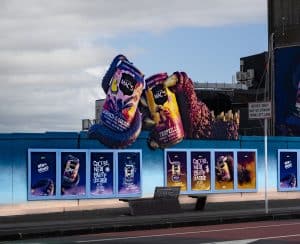
A summer campaign should start with the audience and the places they move through.
The Summer Playbook calls this Own Your Patch. Think about the areas, towns and regions that matter to your brand. Consider where your customers live, shop, work, travel and spend their time during the warmer months.
A few examples:
A retail brand might focus on the streets and suburbs surrounding its stores.
A hospitality business could concentrate on dining and entertainment precincts.
A tourism brand might consider regional centres and destinations that attract visitors over the holiday period.
A national brand may want a consistent presence across Auckland, Wellington, Christchurch and regional markets.
Phantom's locations page gives an overview of the nationwide network. For a closer look at individual markets, explore our Auckland street poster network.
The scale of your campaign should inform the format.
Max A0 posters are a useful starting point for brands looking to build coverage across a range of streets and neighbourhoods. They're Phantom's most popular format and can be used to create a consistent presence across a selected area. Explore Max A0.
Super Street Posters offer a larger canvas, measuring 1820 x 2620mm. That's four times the size of a Max A0, with nearly five square metres of print. They're suited to prominent locations where the campaign needs a substantial physical presence. Explore Super posters.
Custom Shop executions are built around the idea itself. A mural, takeover or 3D installation may need a longer development period, but can create a campaign moment that people notice, photograph and share. See what Custom Shop can build.
You can also combine formats. A Super site might act as the hero placement, with Max A0 posters carrying the campaign across the surrounding area.
For a breakdown of the factors that influence campaign pricing, see our guide to street poster advertising costs in New Zealand.
A late booking doesn't automatically mean a campaign can't happen. It does mean there may be fewer options, particularly if you're looking for a specific location, a high-impact format or a custom execution.
The first thing to do is establish what matters most. Is it the date, the location, the format or the audience? Knowing which elements are fixed and which can move makes it easier to find a workable solution.
A focused campaign in the right area may be more useful than trying to recreate a larger plan with limited time. A simpler execution can also leave room for a stronger idea.
The important thing is to have the conversation early enough to explore those options.
For the Aotearoa launch of New Balance's 204L, MediaHub WW and Phantom built a street presence around Ponsonby Road.
Street posters went up ahead of a pop-up event to build anticipation, while a Custom Shop LED installation gave the campaign a more substantial presence. The posters remained in place after the activation closed, keeping the campaign visible as people continued moving through the neighbourhood.
It was a considered use of timing: the street presence worked before, during and after the event rather than existing for the pop-up alone.
See the New Balance 204L campaign.
The Summer Playbook keeps the planning process simple.
Get in early. Work backwards from key dates. Allow time for creative, approvals, production and placement.
Own your patch. Identify the areas and regional markets that matter to your audience. Choose locations that make sense for the campaign.
Work together. Coordinate outdoor with digital, social and PR. Use the street to build reach and familiarity, then give people more ways to engage.
Outdoor advertising can be an important part of the summer media mix, but it works best when it's planned alongside the rest of the campaign.
We've put the thinking behind these steps into the free Summer Playbook. It covers the summer opportunity, audience movement, campaign timing, location planning and ways to bring outdoor together with other channels.
Explore the Summer campaign and get your Playbook.
If you're already looking at summer dates, get in touch with Phantom. Tell us what you're planning and we'll help you work out the right locations, formats and timing.